





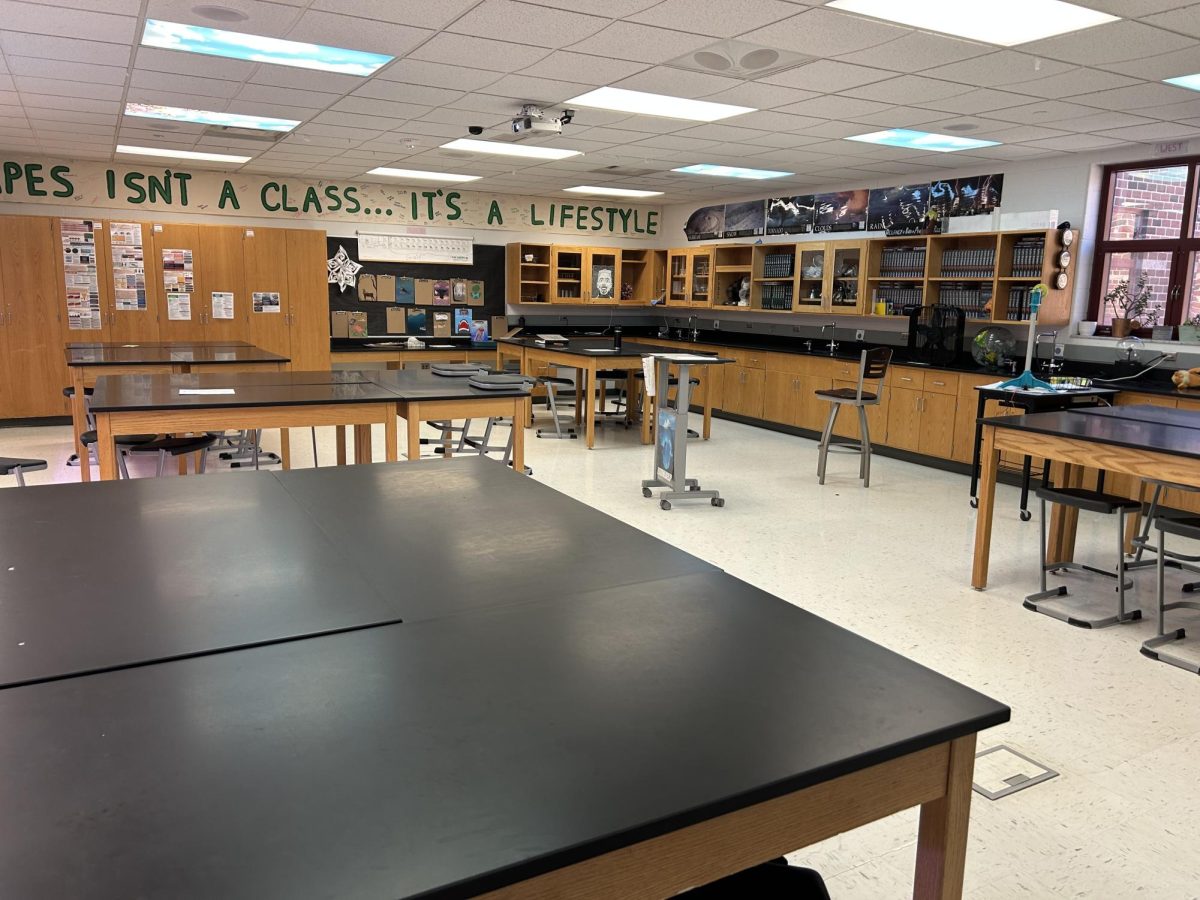





This spring and summer, there will be changes made to the middle school as a result of the hard work of Adam Reed and his AP Environmental Studies (APES) class, as well as the Lower Grand River Organization of Watersheds (LGROW). Planting rain gardens and natural vegetation is a priority and a goal within the APES classroom in order to reduce the amount of pollutants that flow down to our local bodies of water.
On April 20, a representative group of students presented in front of the Spring Lake School Board to propose a solution to poor water quality within our community’s watershed. A watershed is a piece of land that catches and holds all of the precipitation and runoff within an area, and for the last school year, a total of 31 of Adam Reed’s AP Environmental Students have been researching our local watershed and the harmful impact of nutrient, sediment, and effluent pollution on the Grand River.
With the help of LGROW, the group has collected data from different parts of our watershed, including the middle school property. As a class, they observed the results of this data and brainstormed solutions that would protect local bodies of water from chemical and eutrophic pollution. A lake becomes eutrophic when there is an excess of nutrients such as nitrogen and phosphorus, which cause algae to bloom, effectively suffocating the organisms beneath it. Pollutants run off from the middle school bus lot and the game fields, then they flow down the creek behind the building until they enter the Grand River.
As a result, levels of pollutants in the Grand River are rising, and the water quality is declining. The health and safety of the water is concerning, especially for locals who enjoy boating, fishing, and even swimming in the surrounding bayous. It’s important to improve the current condition of our watershed to ensure its longevity and safety for future generations.
To complete this goal, the group of students and LGROW decided that the best solution for Spring Lake would be to implement rain gardens and native plants around the most problematic areas. These locations were chosen to reduce the amount of pollutant runoff because they are located near the most concentrated sources of the pollutants. The root systems and natural vegetation help to prevent pollutants from entering the Grand River by catching fertilizer and effluent before it flows into the water, where it can cause more damage than simply on land.
At the meeting on the 20th, the board members supported the initial plan to increase native plants at the middle school, but they were hesitant to improve conditions at the high school because of the ongoing construction and the constraints of funding. The Middle school project is the easiest to support because of incentives such as media engagement, aesthetics, and the involvement of the surrounding elementary, intermediate, and middle school students.
The proposed project at the high school is more complex because of factors like construction. In the next couple of years, Spring Lake Schools is planning on expanding and adding onto our current facilities. These intensive construction projects require land dedicated to material storage. These areas are called lay-down areas, and they are also where native plants would be able to help in decreasing pollutant runoff. The addition of rain gardens in these areas would only be possible once construction is completed. Dennis Furton, who is the superintendent at Spring Lake High School, describes how the construction could interfere with target areas at a follow-up meeting on the 27th. Along with addressing many of the Board’s concerns, he came prepared and proposed another area that would benefit from the addition of native plants. He described a privately owned lot behind the fieldhouse that has been the home to old “cars, engines, other industrial equipment”. This type of waste releases harmful pollutants such as effluents. A drain is also located nearby, and according to Furton, on top of the amount of soil that’s being eroded, “every time it rains,” the pollutants from the industrial waste are also running off into lower bodies of water. Once construction at the high school is completed, these new sites are most definitely going to be treated and improved.
Plans to add rain gardens and native plants to the Middle school are our current point of focus. The project is incorporated within Adam Reed’s class curriculum, and the summer maintenance will be handled by volunteers within the APES class and passionate students. However, we would like to get started this year.
On May 22, both AP environmental studies classes will attend a trash cleanup and shrub planting at 11:30-2.30pm at the middle school. Shrubs and dogwood trees were purchased for 1 dollar from Kent Conservation District. This day of stewardship will include classes from the surrounding elementary and middle school. This is a way to kick start the project and continue to grow the appreciation for our surrounding ecosystems.